
Smart Converter Lab
Study, develop, and test control systems, diagnostics and cyber-security of power converters, machines, drives, and electric components for future green power systems.
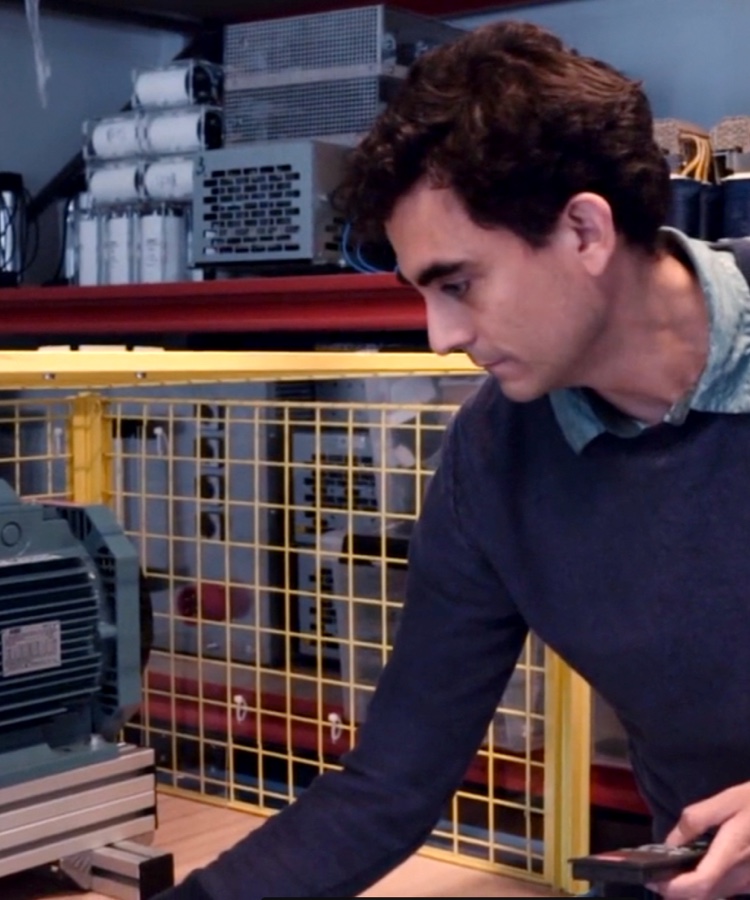
A “sandbox” lab designed to study and develop intelligent converter control strategies
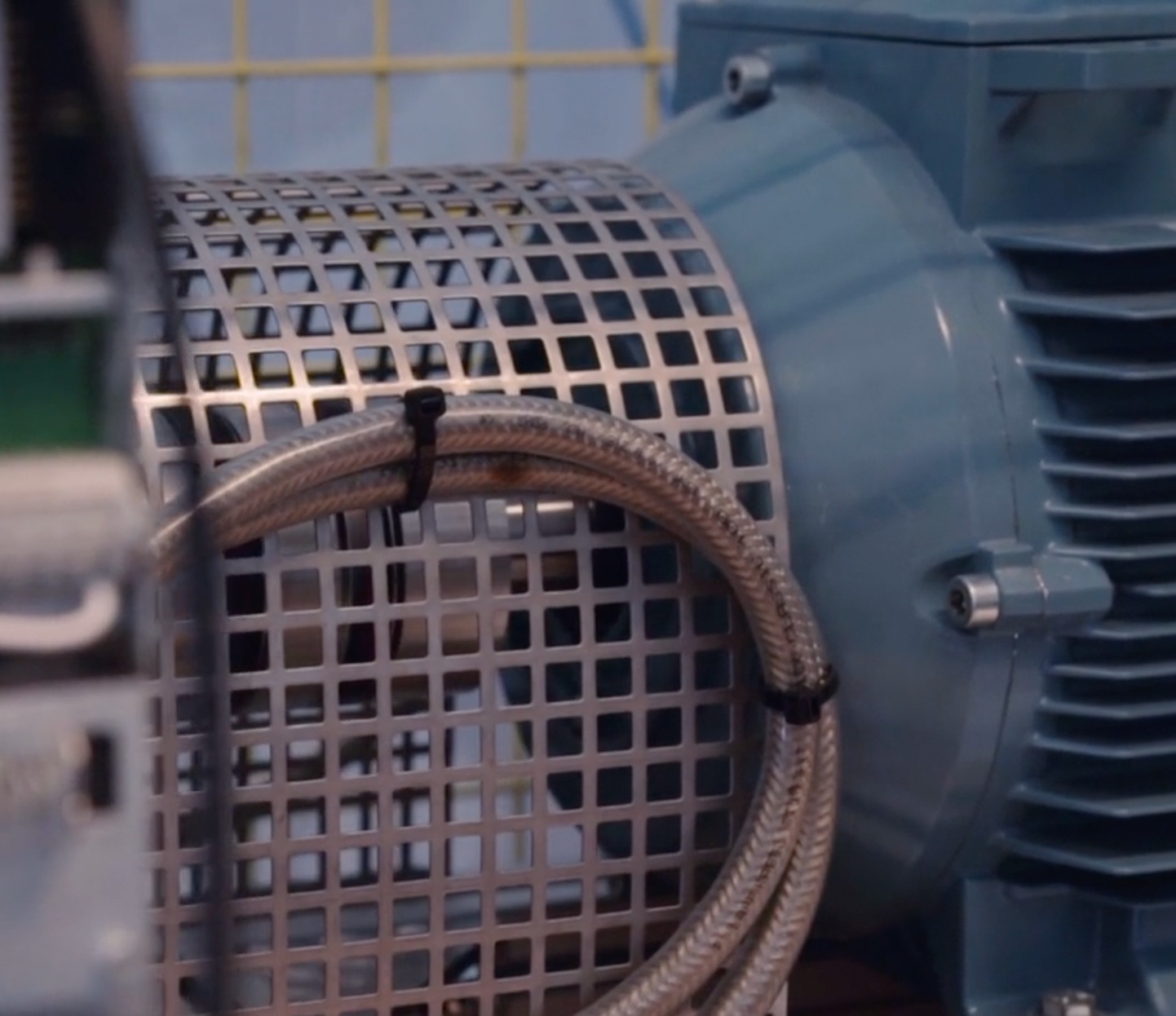
The Smart Converter Lab features more than 10 two-level three-phase converters (e.g. working as Active Front End AFE or other converters) and electrical motors/motor drives from various vendors, with power ratings ranging from 2 kVA to 50 kVA.
The lab hosts a wide variety of edge microprocessors, including over 9 dSPACEs, over 10 Raspberry PIs, and several proprietary processors from various industrial vendors. All microprocessors can be interfaced via IoT gateways to the DTU cloud platform and external collaborators’ cloud platforms.
The Lab also includes analog three-phase 4-quadrant power amplifiers that offer exceptional overload characteristics, providing versatile platform for PHIL tests, lab supply, and component testing combined with grid studies. These amplifiers can emulate different grid conditions, such as voltage and phase non-symmetry, frequency changes, and phase jumps, under controlled conditions.
Emulate, test, and advance power systems and applications in a versatile lab environment
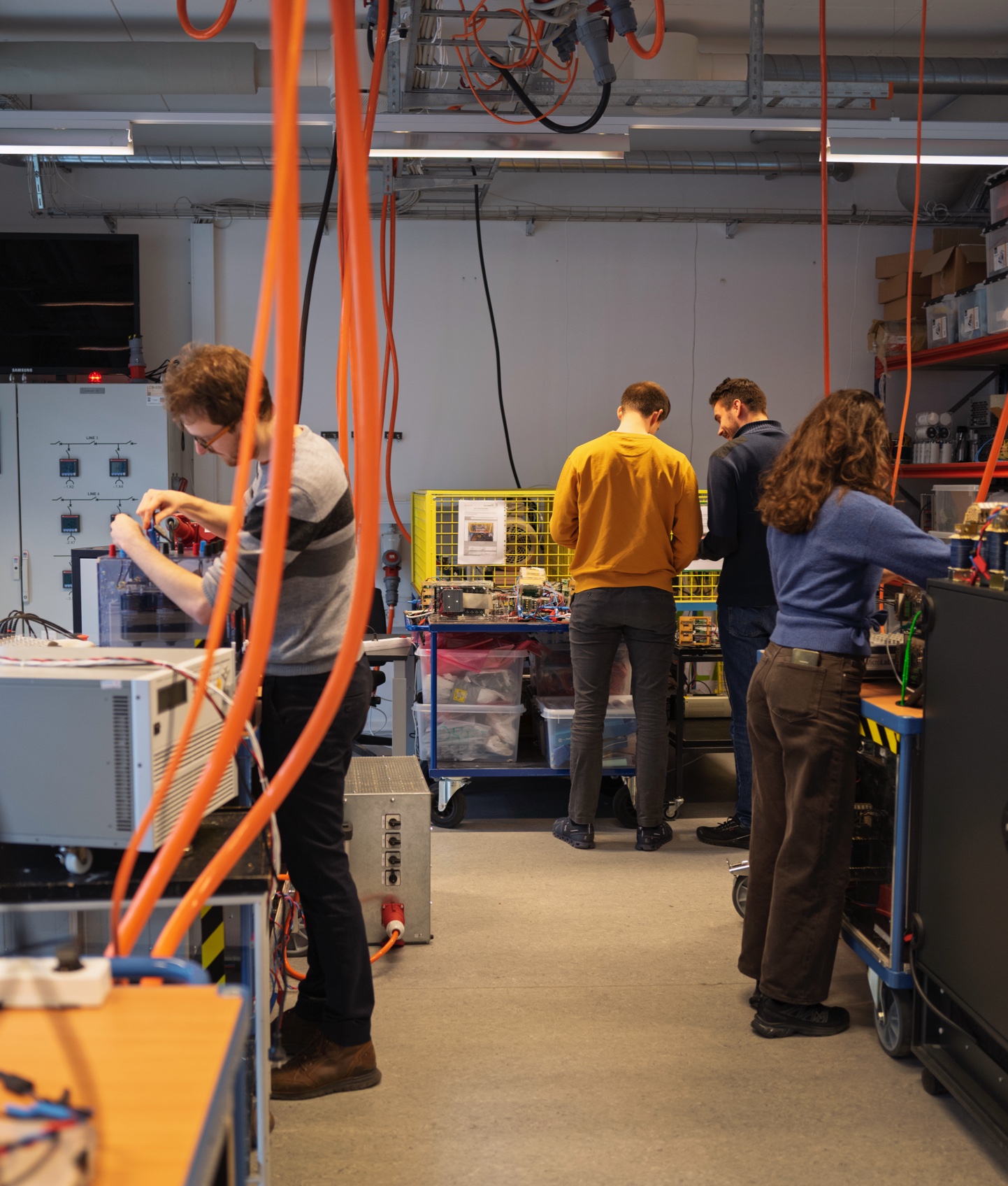
The lab is organized by a number of versatile tandems of general-purpose converters & controller setups, where a wide variety of systems can be emulated in a controlled environment and also cooperatively controlled, either via a local communication network or a DTU cloud platform. Furthermore, the lab has bidirectional data access to several demonstration sites in the real-world, from controllable water pumps and EV charging stations, to fleets of electrical vehicles.
Exemplary applications that have been emulated and tested within the lab
- Cyber-security of converter systems
- Condition montoring of electric machines and drives
- Smart electronically regulated loads (e.g. fans, pumps, compressors)
- Energy islands (i.e. AC and DC microgrids)
- Grid connected converters for renewables and energy storage systems
- PV and wind power plants, HVDC systems
- Electrical vehicles (e.g. cars, ships, aircrafts) and charging infrastructure
- Machine learning and other advanced algorithms for control and diagnostics of broad converter-based power systems
- Conventional (PLL, PI) and advanced control strategy (MPC) of converter systems like AFE, DAB, motor drives
Training in power systems and converter technologies
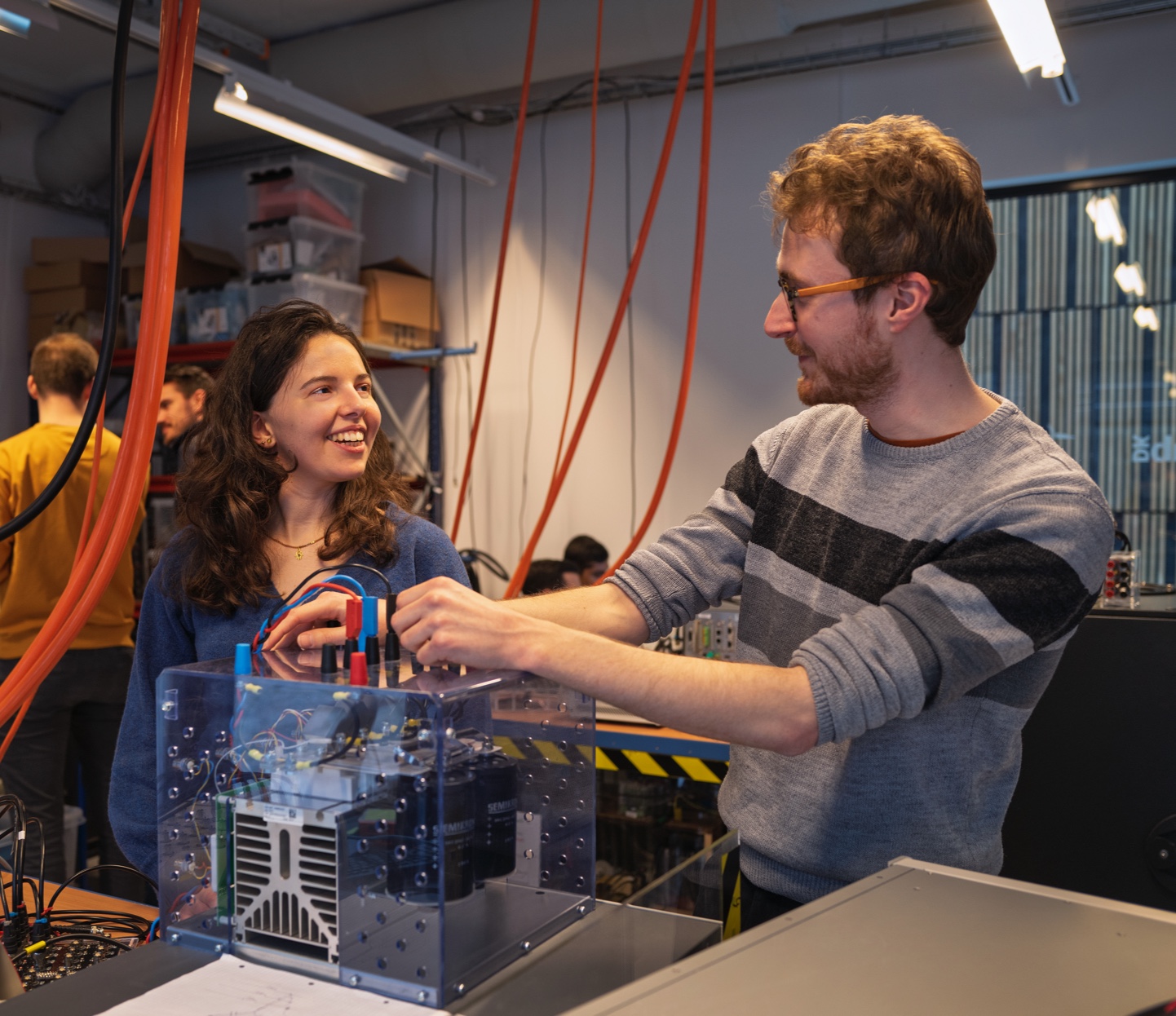
The Smart Converter Lab provides an exceptional platform for education and training, offering students hands-on experience in advanced power systems and converter technologies. Through courses and practical sessions, students can apply theoretical knowledge in areas such as renewable energy systems, electric vehicles, microgrids, cybersecurity, and machine learning. Extending the education into the lab, students benefit by reinforcing the basic concepts of power converter operation and control (modulation technics, common control structures like PLL, PI and PR controllers, AD sampling and numerical data processing technics…), build the experience working with embedded systems and deepen the theoretical knowledge.
Selected projects and use case examples from the lab
DTU Orbit is the official research database of the Technical University of Denmark, DTU, provided by DTU Library
Action Project
The ACTION project aims at developing, implementing and demonstrating smart, highly efficient and cost-effective active-front end (AFE) converters at the grid interface of various electrical motor applications, in order to tap into their vast flexibility potentials.
Read more here.
Heart Project
The HEART project develops world’s most advanced scalable/modular smart electric vehicle fast charger based on the cutting-edge silicon-carbide (SiC) technology. Due to capability to support faster switching frequencies and having improved thermal performance than current silicon-based chargers, new SiC-based charger will have much higher power density and higher efficiency, while at the same time similar cost per kW compared to today’s best fast chargers in the market. Moreover, several innovative functions (plug and play connectivity of supplementary energy storage, voltage/frequency support and congestion management capabilities, weak grid operability through local grid impedance estimation and charger’s own impedance shaping), which are not available in existing competitor products, will be developed and integrated into the new charger.
Read more here.
Magic Project
Electrical power is somewhat like the air we breathe: We don’t really think about it until it is missing. However, we will need to come up with radical innovations to keep it that way as the green transition takes its full swing. Namely, we will need to substantially increase the flexibility of the power grid to be able to host a vast volume of variable renewable energy sources like wind and solar, and hundreds of thousands new plug-in EVs that will hit the Danish roads over the coming decade. MAGIC project is based on a notion that many of the electrical loads that exist in the grid, such as motor drives, EV chargers and electrolyzers, are naturally flexible in their energy consumption, and that this cost-free flexibility can be unlocked by connecting them to the grid via smart active-front-end (AFE) power electronic converters. Namely, each of these AFEs collects substantial amount of data (grid and load measurements, internal AFE states), which hides valuable information about the grid stability conditions, available load flexibility and AFE’s health. Project proposes a wide variety of machine learning based methods that are able to uncover this information in computationally efficient way, and to use it for achieving scalable diagnostics and grid-supporting control of millions AFE-loads and more, thereby enabling them to serve as the solid bedrocks of the green transition to 100% renewable-energy-based power grids.
Read more here.
ECO-DRIVE Project
Electric motors constitute more than a half of the total global electricity consumption.
The use of Variable-Speed-Drives (VSDs), which are controllable power converters, is widely recognized for providing energy savings in motor-based systems. Compared to Direct-On-Line (DOL) motors, which are directly connected to the power grid and operated at a fixed speed determined by the grid frequency, utilizing variable speed can lead to a 15-55% reduction in energy consumption.
While these benefits of VSDs are well-known and widely recognised, a remarkable 80% of globally installed electrical motors are still operated as DOL motors. The primary factor hindering greater VSD integration are technical complexities and the costs associated with retrofitting currently available VSD technology into already established DOL motor systems.
The primary objective of technological innovation within the ECO-Drive project is to significantly decrease the retrofitting costs associated with existing motor installations and thereby open a considerable portion (25%) of the presently inaccessible DOL-operated motor market over the next decade.
The innovation involves the integration of semiconductor devices and harmonic filters into a single drive product.
The beta version of ECO-Drive product will be developed by Danfoss Drives and DTU and will then undergo initial testing in state-of-the-art lab facilities and several real-world demonstrators at the Danish Island of Bornholm.
Read more here.
Lab staff

Technical Contact
Nenad Mijatovic
Assoc. Professor, DTU
nemi@dtu.dk